
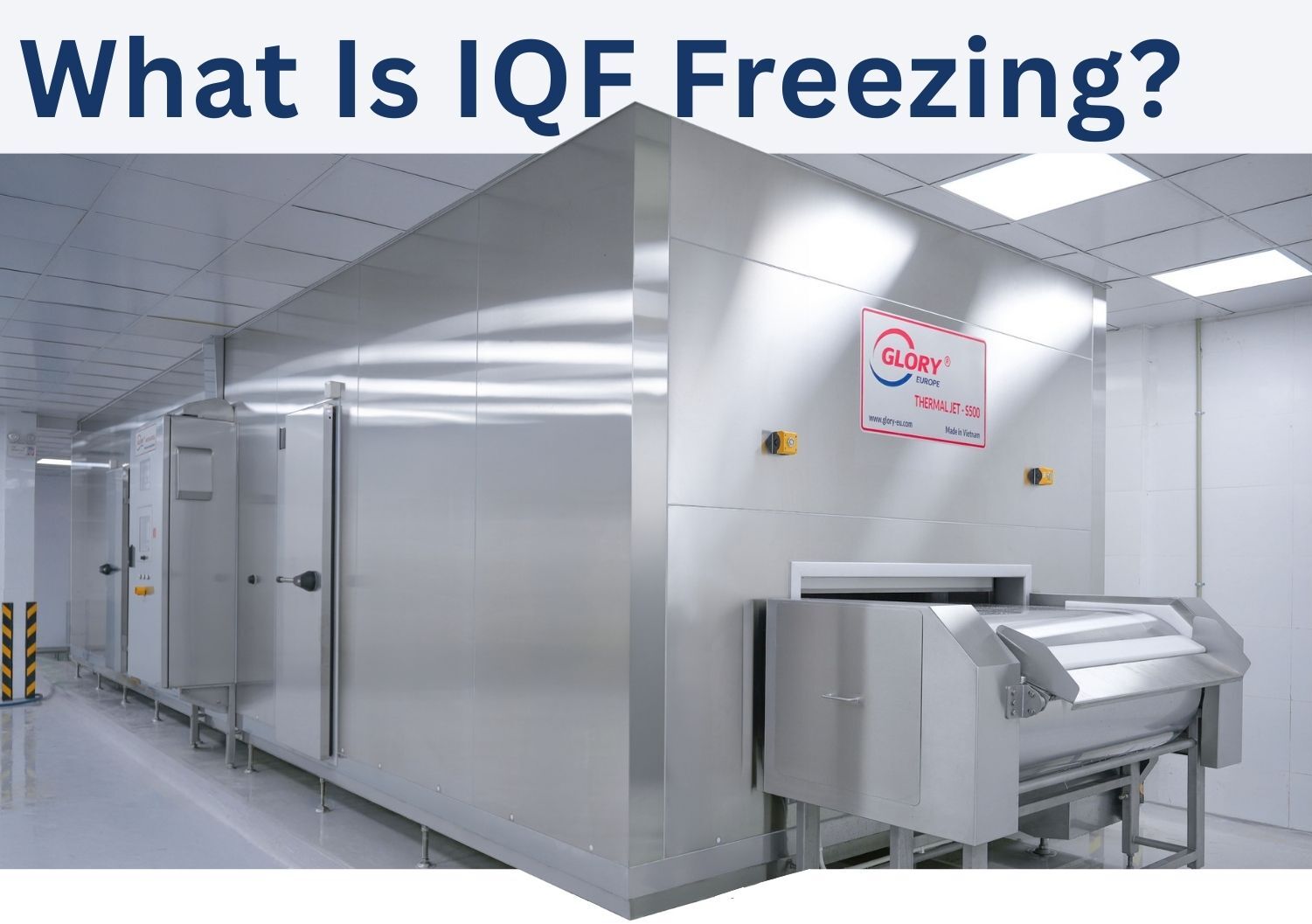
I/ Why IQF Freezing Matters in Modern Food Processing
In today’s global food industry, maintaining product quality, yield, hygiene, and shelf life is more critical than ever. As frozen food consumption continues to rise worldwide, processors are under increasing pressure to adopt freezing technologies that preserve natural texture, appearance, and nutritional value.
This is where IQF freezing (Individual Quick Freezing) has become the industry standard.
Unlike traditional block or slow freezing methods, IQF freezing allows each piece of food to be frozen individually, quickly, and evenly, ensuring superior quality and maximum flexibility for downstream processing and distribution.
II/ What Is IQF Freezing?
IQF freezing stands for Individual Quick Freezing, a food preservation method in which individual food pieces are frozen rapidly at very low temperatures, typically using high-velocity cold air.
The key characteristic of IQF freezing is that each unit remains separate, free-flowing, and non-clumped after freezing.
Key characteristics of IQF freezing:
Rapid heat removal
Formation of micro ice crystals
No product agglomeration
Free-flowing final product
IQF technology is widely used in seafood, vegetables, fruits, meat, and ready-to-cook products.
III/ How Does IQF Freezing Work?
The IQF freezing process is based on intense heat exchange between cold air and the product surface.
Basic IQF Freezing Process:
Product feeding onto a conveyor belt
High-velocity cold air blown vertically or horizontally
Rapid surface freezing
Core temperature reduction to target level
Continuous discharge of frozen products
Depending on product characteristics, different IQF systems are used to optimize airflow, belt type, and freezing time.
IV/ Core Principles Behind IQF Freezing Efficiency
1. Rapid Freezing Speed
The faster a product freezes, the smaller the ice crystals formed inside the food structure.
This minimizes cell damage, leading to:
Better texture after thawing
Lower drip loss
Higher yield
2. Individual Freezing (No Clumping)
IQF systems are designed to keep products separated during freezing, ensuring:
簡単に小分けできる
Better packaging efficiency
Uniform freezing results
3. Controlled Airflow & Temperature
Precise airflow distribution ensures:
Even freezing across the belt
Consistent product quality
- Reduced dehydration
V/ Types of IQF Freezers Used in Food Processing
Different products require different IQF technologies. Below are the most common industrial IQF freezer types:
1. Fluidized Bed IQF Freezer
Best for:
Small, lightweight products
Vegetables (peas, corn, diced okra)
Fruits (berries, diced mango)
Key advantage: Product particles float on cold air, ensuring perfect separation.
2. Mesh Belt IQF Freezer
Best for:
Shrimp
Small seafood
付加価値製品
Key advantage: 様々な製品に対応できる高い柔軟性と適応性。
3. スチールベルト式IQF冷凍庫
Best for:
柔らかい製品またはデリケートな製品
フィレ
マリネまたは照り焼き料理
Key advantage:
ベルトの跡なし
製品を丁寧に扱う
- 優れた衛生設計
4. ハイブリッドIQF冷凍庫
Best for:
複数の製品ライン
複雑な処理要件
Key advantage: 複数の冷凍原理を1つのシステムに統合しています。
VI/ 工業用食品生産におけるIQF冷凍の利点
1. 優れた製品品質
IQF冷凍保存食品:
自然な形状
色と外観
オリジナルテクスチャ
栄養価
2. 収量向上と凍結損失低減
表面の急速凍結により、以下の効果が軽減されます。
Dehydration
体重減少
Drip loss after thawing
3. 食品安全性の向上
最新のIQF冷凍庫は、以下の特長を備えています。
衛生的なステンレス鋼構造
掃除しやすい
世界的な食品安全基準への準拠
4. 運用上の柔軟性
IQF製品には以下が含まれます。
再パッケージ化
混合
簡単に小分けできる
付加価値ラインに統合
| 基準 | IQF冷凍 | ブロック冷凍 |
|---|---|---|
| 自由に流れる | ✅ はい | ❌ いいえ |
| Freezing speed | 非常に速い | 遅い |
| 製品の品質 | Excellent | Moderate |
| Yield retention | 高い | より低い |
| 柔軟性 | 高い | Low |
VII/ IQF冷凍が冷凍食品の未来である理由
世界的な需要が 高品質の冷凍食品 市場が拡大し続ける中、IQF冷凍はもはや選択肢ではなく、必須となっている。
最新のIQF技術に投資する加工業者は、以下のメリットを享受できます。
収益性の向上
市場競争力の強化
長期的な業務効率
VIII/ 適切なIQF冷凍ソリューションの選択
適切なIQF冷凍庫を選ぶには、以下の点が重要です。
製品タイプ
容量要件
衛生基準
エネルギー効率目標
利用可能な植物スペース
適切に設計されたIQFシステムは、 最適な性能、最小限の損失、そして信頼性の高い長期運用.
IX/結論
IQF冷凍は、今日の食品加工業界において最も先進的で信頼性の高い冷凍技術です。その原理、利点、用途を理解することで、加工業者は直接影響を与える情報に基づいた意思決定を行うことができます。 製品の品質、歩留まり、収益性.
空気の流れの設計、衛生面、エネルギー効率における継続的な革新により、IQF冷凍は現代の冷凍食品生産の基盤であり続けている。