

 Japanese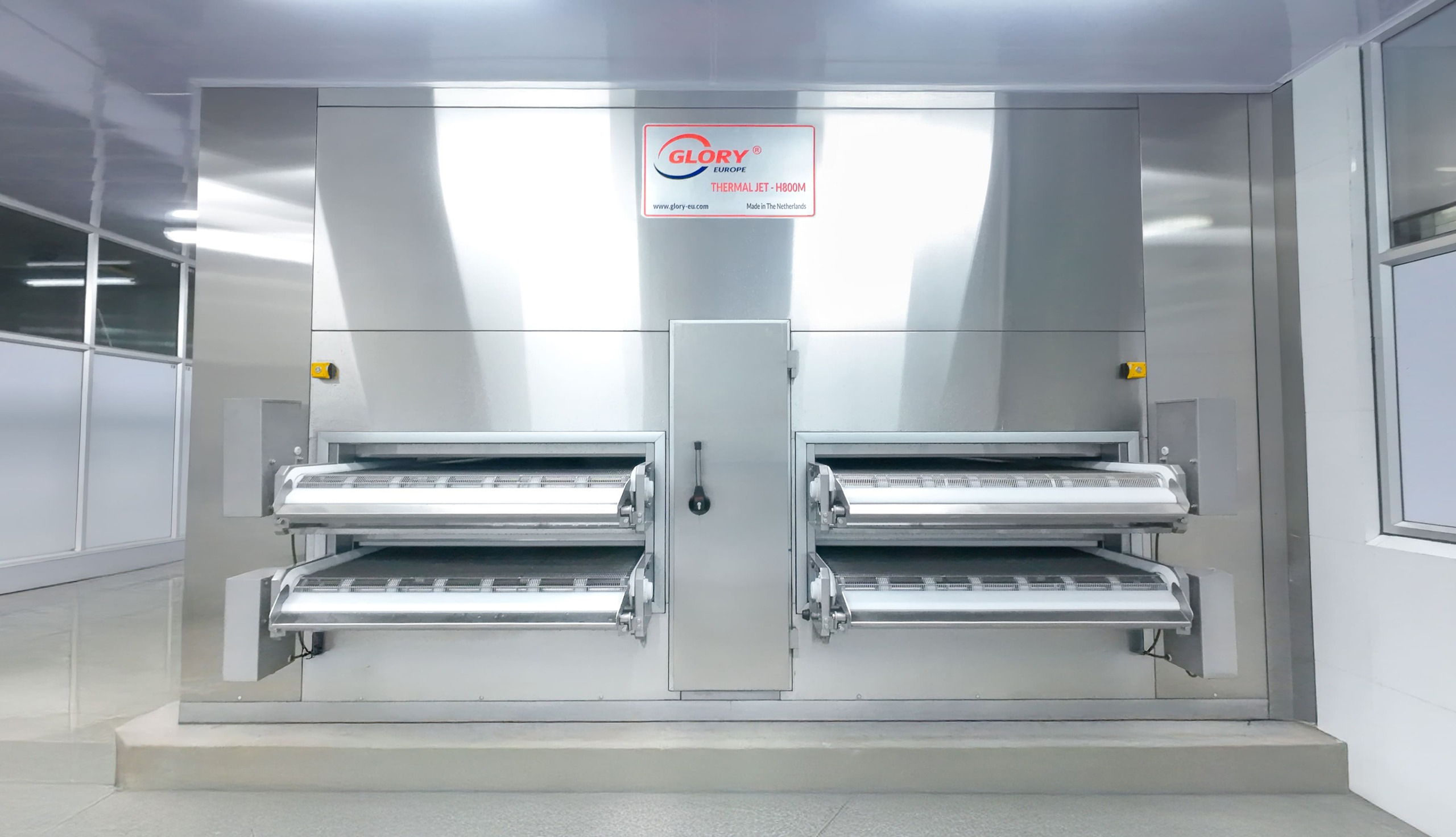
I/ Introduction: Why Many Plants Need More Than a Standard IQF
Food processing plants increasingly handle a wider product portfolio: different product types, seasonal runs, and varying specs demanded by export markets. In these scenarios, a single “one-application” IQF configuration may not deliver the best balance between:
Freezing speed and consistency
Yield retention and dehydration control
Product appearance and integrity
Operational flexibility
That is where an impingement-based Hybrid IQF freezer becomes a strategic option — especially for medium-size vegetables and fruits.
II/ What Is a Hybrid IQF Freezer
In this context, a Hybrid IQF freezer refers to an IQF system built on the impingement freezing principle: high-velocity cold air jets are directed to hit (impinge on) the product surface to maximize heat transfer.
What makes it “hybrid”
“Hybrid” here is typically about hybrid airflow control / multi-zone impingement / flexible process configuration (rather than fluidized bed integration). The system is engineered to provide adjustable impingement intensity and freezing profiles across zones to match different product behaviors—particularly for medium-size pieces where strong surface freezing matters.
III/ Why Impingement-Based Hybrid IQF Is Effective
Impingement airflow enhances freezing performance by:
Increasing heat transfer at the product surface
Accelerating surface crust formation (helps reduce dehydration and drip loss)
Delivering more uniform freezing when airflow distribution is optimized
Improving stability for products that are not suitable for fluidization
IV/ Best Applications: Where Hybrid IQF Makes the Most Sense
1) Medium-size vegetables and fruits
Hybrid impingement IQF is typically effective for products such as:
Vegetables (medium cuts): okra cuts (larger pieces), diced/segments with moderate size, certain mixed veg components
Fruits (medium chunks/slices): mango chunks, pineapple chunks, fruit segments
Why it fits: Medium pieces benefit from aggressive, controlled surface freezing without requiring fluidization.
2) Products that need strong surface freezing to protect yield
If your plant often faces:
Dehydration / weight loss
Higher drip loss after thawing
Surface quality complaints
then an impingement-based hybrid IQF can help by locking the surface quickly, reducing moisture migration during freezing.
3) Plants running multiple medium-size SKUs (but not tiny items)
Hybrid IQF becomes attractive when you run multiple SKUs that share similar size class (medium) but differ in:
Moisture level
Cut geometry
Target finish quality
Multi-zone impingement control helps operators tune freezing profiles per SKU without rebuilding the line.
4) When you need consistent freezing across the belt width
Many plants struggle with:
Over-frozen edges / under-frozen center (or vice versa)
Uneven core temperature at discharge
A well-designed impingement system with proper air distribution can improve uniformity and consistency, which directly impacts quality stability and customer acceptance.
V/ Important Limitation: What Hybrid IQF Is NOT Ideal For
Not ideal for very small products
Hybrid impingement IQF is not the best choice for very small, lightweight items like:
peas
corn kernels
tiny diced vegetables
These products typically require fluidized bed IQF to achieve true “separation by fluidization” and prevent clumping efficiently.
Practical reason: Small products benefit from “lifting/separating” behavior that impingement systems do not provide in the same way.
VI/ Key Benefits of Impingement-Based Hybrid IQF
Fast freezing and strong surface freezing (helps reduce dehydration)
Better quality consistency with correct airflow distribution
Suitable for medium-size veg & fruit where fluidization is not required
Flexible zone control to adapt freezing profile per SKU
Long-term investment protection for plants expanding product portfolio in the same size class
VII/ How to Decide If Hybrid IQF Is Right for Your Plant
Ask these questions:
Are most of your target products medium-size cuts/chunks (veg/fruit)?
Is dehydration / yield loss a recurring issue?
Do you need stable, repeatable freezing results across different SKUs?
Do you prioritize a flexible system without switching to a separate technology line?
If “yes” to most, an impingement-based Hybrid IQF is likely a strong fit.
VIII/ Conclusion
A Hybrid IQF freezer based on the impingement principle is a strategic solution for plants freezing medium-size vegetables and fruits, where strong surface freezing, process flexibility, and consistency are critical.
It should not be positioned as a substitute for fluidized bed IQF in small-product applications. Instead, it serves a different purpose: delivering controlled, high-intensity impingement freezing for the right product size range and quality goals.