

 English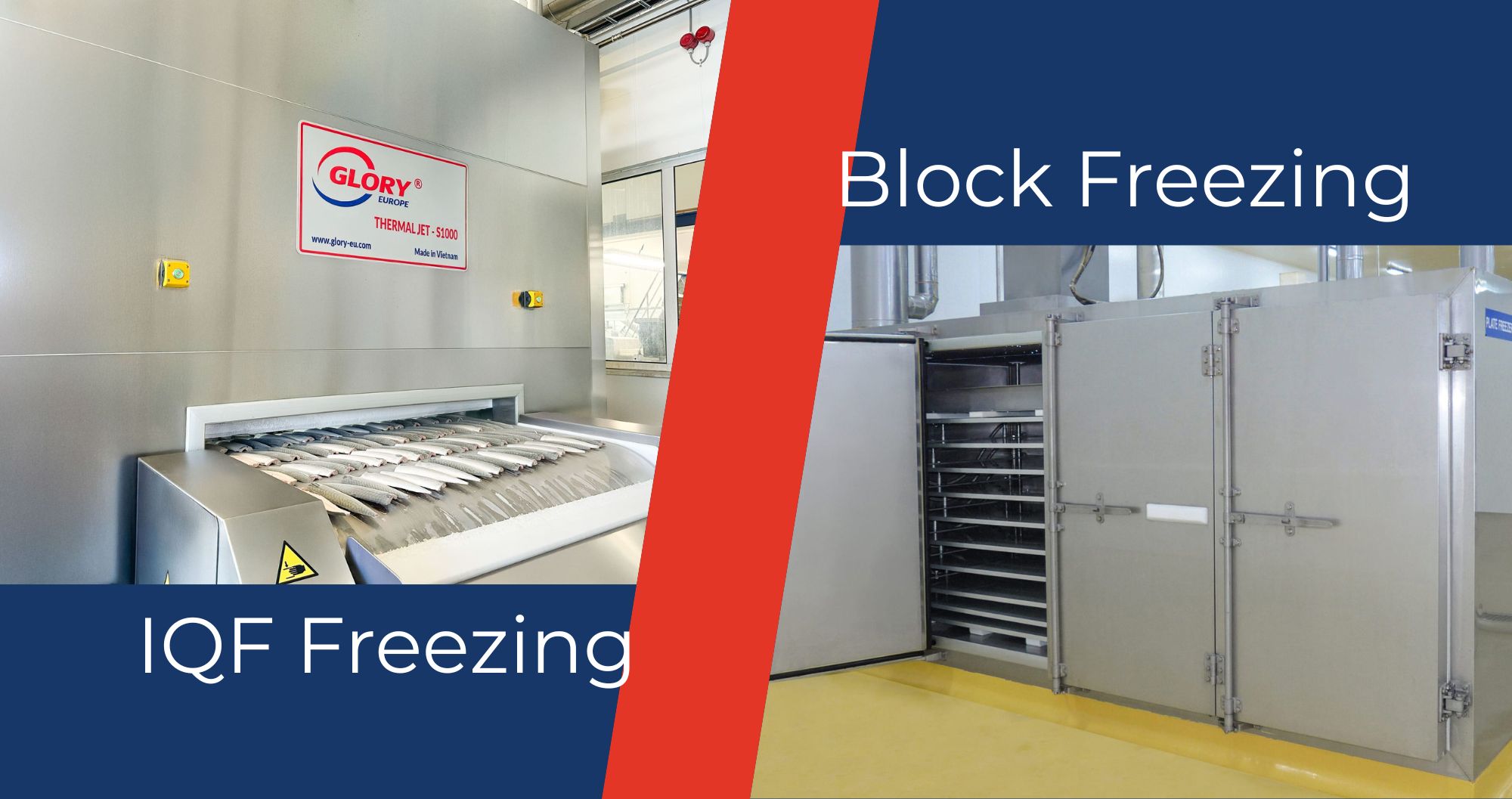
I/ Introduction: Why IQF and Block Freezing Are Often Compared
In industrial food processing, IQF freezing and block freezing are two of the most commonly used freezing methods—especially in seafood, fruits, vegetables, and meat processing.
Both technologies aim to extend shelf life and preserve food safety, but they differ significantly in:
Yield retention
Product quality after thawing
Operational flexibility
Total cost of ownership
Choosing the wrong freezing method can result in hidden losses that impact profitability over time.
This article provides a clear, practical comparison of IQF vs block freezing, focusing on yield, quality, and cost—the three factors that matter most to processors.
II/ What Is IQF Freezing?
IQF (Individual Quick Freezing) is a rapid freezing process where each product piece is frozen individually using high-velocity cold air.
Key characteristics:
Very fast freezing speed
Individual product separation
Small ice crystal formation
Free-flowing frozen products
IQF freezing is widely used for:
Shrimp and seafood
Fish fillets
Vegetables and fruits
Value-added food products
III/ What Is Block Freezing?
Block freezing is a traditional freezing method where products are frozen together as a solid block, typically in cartons, trays, or molds.
Key characteristics:
Slower freezing process
Products frozen in bulk
Large ice crystal formation
Fixed product shape and size
Block freezing is commonly used for:
Bulk seafood storage
Raw material buffering
Low-value or further-processing products
IV/ Yield Comparison: IQF vs Block Freezing
IQF Freezing – Higher Yield Retention
Rapid surface freezing reduces dehydration
Shorter exposure to cold air
Lower moisture loss during freezing
Result:
Higher yield and less weight loss after freezing and thawing.
Block Freezing – Higher Freezing Loss
Slow freezing allows moisture evaporation
Long freezing time increases dehydration risk
More drip loss after thawing
Result:
Lower yield retention, especially noticeable in high-moisture products like shrimp and fish.
👉 Key insight:
Even a 1–2% yield difference can significantly impact profit in large-scale processing.
V/ Product Quality Comparison
1. Texture and Structure
IQF Freezing:
Small ice crystals
Minimal cell damage
Firmer texture after thawing
Block Freezing:
Large ice crystals
Cell rupture
Softer texture and higher drip loss
2. Appearance and Market Value
IQF Freezing:
Individual, free-flowing products
Better visual appearance
Higher acceptance in premium markets
Block Freezing:
Solid frozen blocks
Limited flexibility in presentation
Lower perceived product value
VI/ Operational Flexibility
IQF Freezing
Easy portioning and repacking
Suitable for mixed product sizes
Supports glazing and re-freezing
Ideal for value-added processing
Block Freezing
Fixed block size and shape
Requires additional cutting or processing
Less adaptable to market demands
VII/ Cost Comparison: Initial Investment vs Long-Term Cost
1. Initial Investment
IQF Freezing:
Higher upfront equipment cost
More complex system design
Block Freezing:
Lower initial investment
Simpler equipment
2. Operating Cost & Total Cost of Ownership (TCO)
IQF Freezing:
Higher energy use per hour
Higher efficiency per kg of product
Lower product loss and waste
Block Freezing:
Lower energy intensity
Higher yield loss
Additional labor and reprocessing costs
👉 Important:
Block freezing may appear cheaper initially, but hidden costs from yield loss and limited flexibility often outweigh the savings over time.
VIII/ IQF vs Block Freezing: Side-by-Side Comparison
| Criteria | IQF Freezing | Block Freezing |
|---|---|---|
| Freezing speed | Very fast | Slow |
| Yield retention | High | Lower |
| Product quality | Excellent | Moderate |
| Ice crystal size | Small | Large |
| Free-flowing product | Yes | No |
| Operational flexibility | High | Low |
| Initial investment | Higher | Lower |
| Long-term profitability | High | Limited |
IX/ When Block Freezing Still Makes Sense
Block freezing remains a practical solution when:
Products are intended for further processing
Bulk storage is required
Budget constraints are critical
Product appearance is not a priority
Block freezing is often used as a raw material freezing method, rather than for finished consumer products.
X/ When IQF Freezing Is the Better Choice
IQF freezing is the preferred solution when processors focus on:
Premium product quality
Yield optimization
Free-flowing products
Export and retail markets
Value-added food production
For processors targeting higher margins and flexible product formats, IQF freezing offers a clear advantage.
#Key Takeaway: Yield and Quality Drive Profitability
The choice between IQF and block freezing is not only a technical decision—it is a business decision.
Block freezing minimizes initial cost
IQF freezing maximizes long-term value through higher yield, better quality, and greater flexibility
Understanding these trade-offs allows processors to select the freezing technology that aligns with their market strategy and profitability goals.
XI/ Conclusion
Both IQF freezing and block freezing play important roles in food processing.
However, when comparing yield, quality, and cost over time, IQF freezing consistently outperforms block freezing for premium and value-added products.
For processors aiming to reduce losses, improve quality, and remain competitive in global markets, IQF freezing is the more sustainable long-term solution.