

 English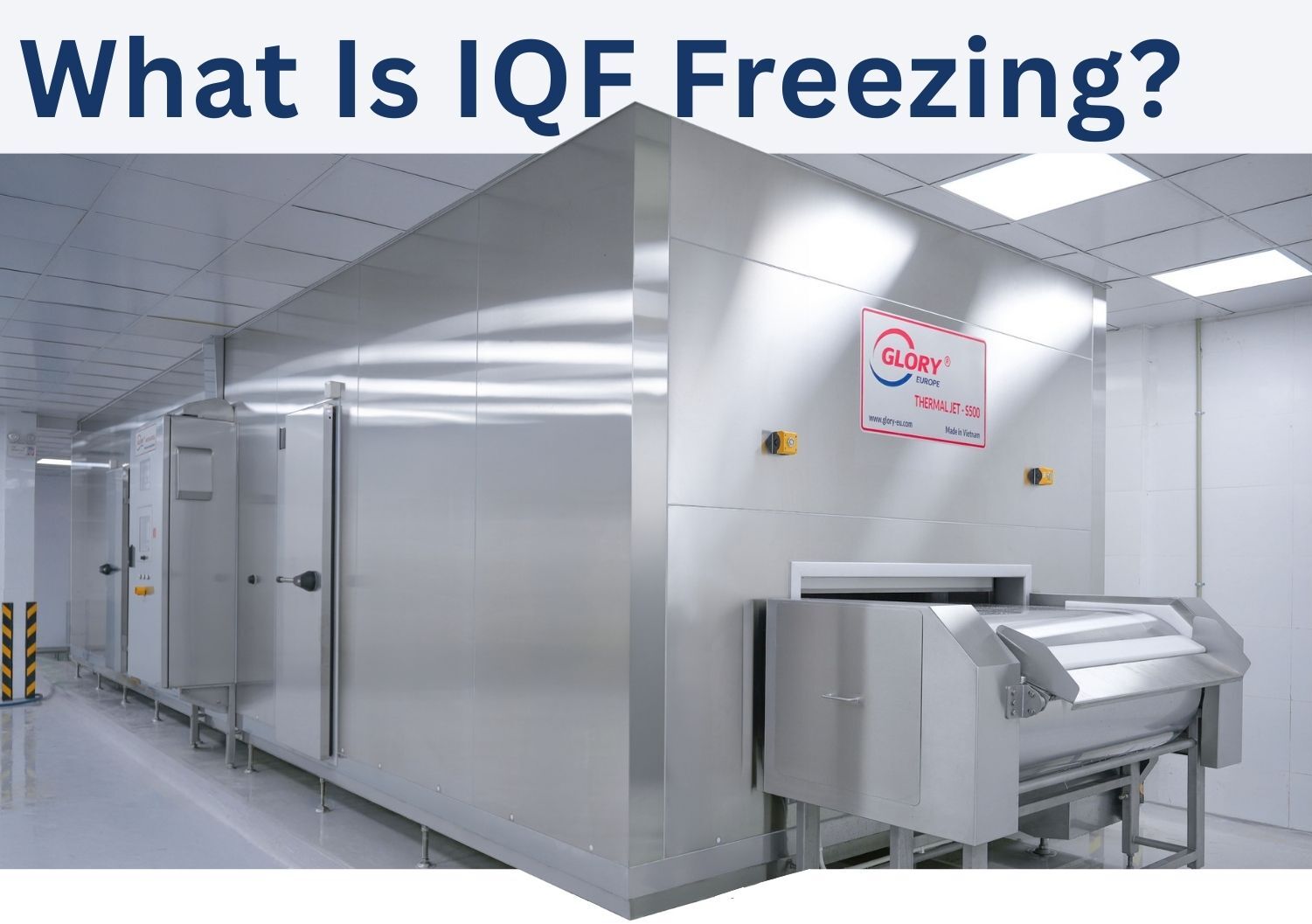
I/ Why IQF Freezing Matters in Modern Food Processing
In today’s global food industry, maintaining product quality, yield, hygiene, and shelf life is more critical than ever. As frozen food consumption continues to rise worldwide, processors are under increasing pressure to adopt freezing technologies that preserve natural texture, appearance, and nutritional value.
This is where IQF freezing (Individual Quick Freezing) has become the industry standard.
Unlike traditional block or slow freezing methods, IQF freezing allows each piece of food to be frozen individually, quickly, and evenly, ensuring superior quality and maximum flexibility for downstream processing and distribution.
II/ What Is IQF Freezing?
IQF freezing stands for Individual Quick Freezing, a food preservation method in which individual food pieces are frozen rapidly at very low temperatures, typically using high-velocity cold air.
The key characteristic of IQF freezing is that each unit remains separate, free-flowing, and non-clumped after freezing.
Key characteristics of IQF freezing:
Rapid heat removal
Formation of micro ice crystals
No product agglomeration
Free-flowing final product
IQF technology is widely used in seafood, vegetables, fruits, meat, and ready-to-cook products.
III/ How Does IQF Freezing Work?
The IQF freezing process is based on intense heat exchange between cold air and the product surface.
Basic IQF Freezing Process:
Product feeding onto a conveyor belt
High-velocity cold air blown vertically or horizontally
Rapid surface freezing
Core temperature reduction to target level
Continuous discharge of frozen products
Depending on product characteristics, different IQF systems are used to optimize airflow, belt type, and freezing time.
IV/ Core Principles Behind IQF Freezing Efficiency
1. Rapid Freezing Speed
The faster a product freezes, the smaller the ice crystals formed inside the food structure.
This minimizes cell damage, leading to:
Better texture after thawing
Lower drip loss
Higher yield
2. Individual Freezing (No Clumping)
IQF systems are designed to keep products separated during freezing, ensuring:
Easy portioning
Better packaging efficiency
Uniform freezing results
3. Controlled Airflow & Temperature
Precise airflow distribution ensures:
Even freezing across the belt
Consistent product quality
- Reduced dehydration
V/ Types of IQF Freezers Used in Food Processing
Different products require different IQF technologies. Below are the most common industrial IQF freezer types:
1. Fluidized Bed IQF Freezer
Best for:
Small, lightweight products
Vegetables (peas, corn, diced okra)
Fruits (berries, diced mango)
Key advantage: Product particles float on cold air, ensuring perfect separation.
2. Mesh Belt IQF Freezer
Best for:
Shrimp
Small seafood
Value-added products
Key advantage: High flexibility and adaptability for various products.
3. Steel Belt IQF Freezer
Best for:
Soft or delicate products
Fillets
Marinated or glazed items
Key advantage:
No belt marks
Gentle product handling
- Excellent hygiene design
4. Hybrid IQF Freezer
Best for:
Mixed product lines
Complex processing requirements
Key advantage: Combines multiple freezing principles in one system.
VI/ Benefits of IQF Freezing in Industrial Food Production
1. Superior Product Quality
IQF freezing preserves:
Natural shape
Color and appearance
Original texture
Nutritional value
2. Higher Yield & Lower Freezing Loss
Fast surface freezing reduces:
Dehydration
Weight loss
Drip loss after thawing
3. Improved Food Safety
Modern IQF freezers are designed with:
Hygienic stainless steel construction
Easy cleaning access
Compliance with global food safety standards
4. Operational Flexibility
IQF products can be:
Repacked
Mixed
Portioned easily
Integrated into value-added lines
| Criteria | IQF Freezing | Block Freezing |
|---|---|---|
| Free-flowing | ✅ Yes | ❌ No |
| Freezing speed | Very fast | Slow |
| Product quality | Excellent | Moderate |
| Yield retention | High | Lower |
| Flexibility | High | Low |
VII/ Why IQF Freezing Is the Future of Frozen Food
As global demand for high-quality frozen food continues to grow, IQF freezing is no longer optional—it is essential.
Processors investing in modern IQF technology benefit from:
Higher profitability
Stronger market competitiveness
Long-term operational efficiency
VIII/ Choosing the Right IQF Freezing Solution
Selecting the right IQF freezer depends on:
Product type
Capacity requirements
Hygiene standards
Energy efficiency goals
Available plant space
A well-designed IQF system ensures optimal performance, minimal loss, and reliable long-term operation.
IX/ Conclusion
IQF freezing represents the most advanced and reliable freezing technology in today’s food processing industry. By understanding its principles, benefits, and applications, processors can make informed decisions that directly impact product quality, yield, and profitability.
With continuous innovation in airflow design, hygiene, and energy efficiency, IQF freezing remains the cornerstone of modern frozen food production.